
Criminal Cases in the Williamsburg County Courts
Williamsburg County General Sessions is the main trial court for felonies and the criminal misdemeanors assigned to that level. It sits within South Carolina's Third Judicial Circuit. The Williamsburg County Clerk of Court keeps the General Sessions docket, filed motions, dispositions, sentencing records, fines, and bench-warrant entries. The Clerk's office is at 201 W. Main Street in Kingstree. The main number is 843-355-9321.
Lower-level matters do not all enter that file. Williamsburg magistrates exercise statutory summary criminal and traffic jurisdiction. Kingstree Municipal Court hears charges made by Kingstree Police except offenses sent to General Sessions. The place of filing thus controls the search. A municipal citation can remain with the town court, while a felony arising from the same police department moves into General Sessions. Readers should identify the issuing agency, court, and case number before asking one clerk to search another court's records.
The magistrate criminal-jurisdiction law helps explain that lower tier. The municipal court statute defines the town-court layer. These sources support the venue split shown in the Williamsburg County case record rather than a guess based only on the charge name.
Route Williamsburg Court Record Calls
Williamsburg County publishes an unusually useful division of work at the General Sessions desk. Extension 7102 handles pending and indicted-pending cases, expungements, and bench warrants. Extension 7103 handles remanded matters, dispositions, sheriff transmittals, and court fines. Choosing the extension by the record's stage can save a call from being passed between staff.
The county's Clerk divisions and duties page is the source for that routing. Ask for a specific existing item, such as a sentencing sheet, filed disposition, indictment, or docket entry. A broad request for all information is less precise. The county page does not publish a copy or certification fee, so ask the Clerk for the current charge and available delivery format before placing an order.
The county division view is shown below as a visual check on the office routing.
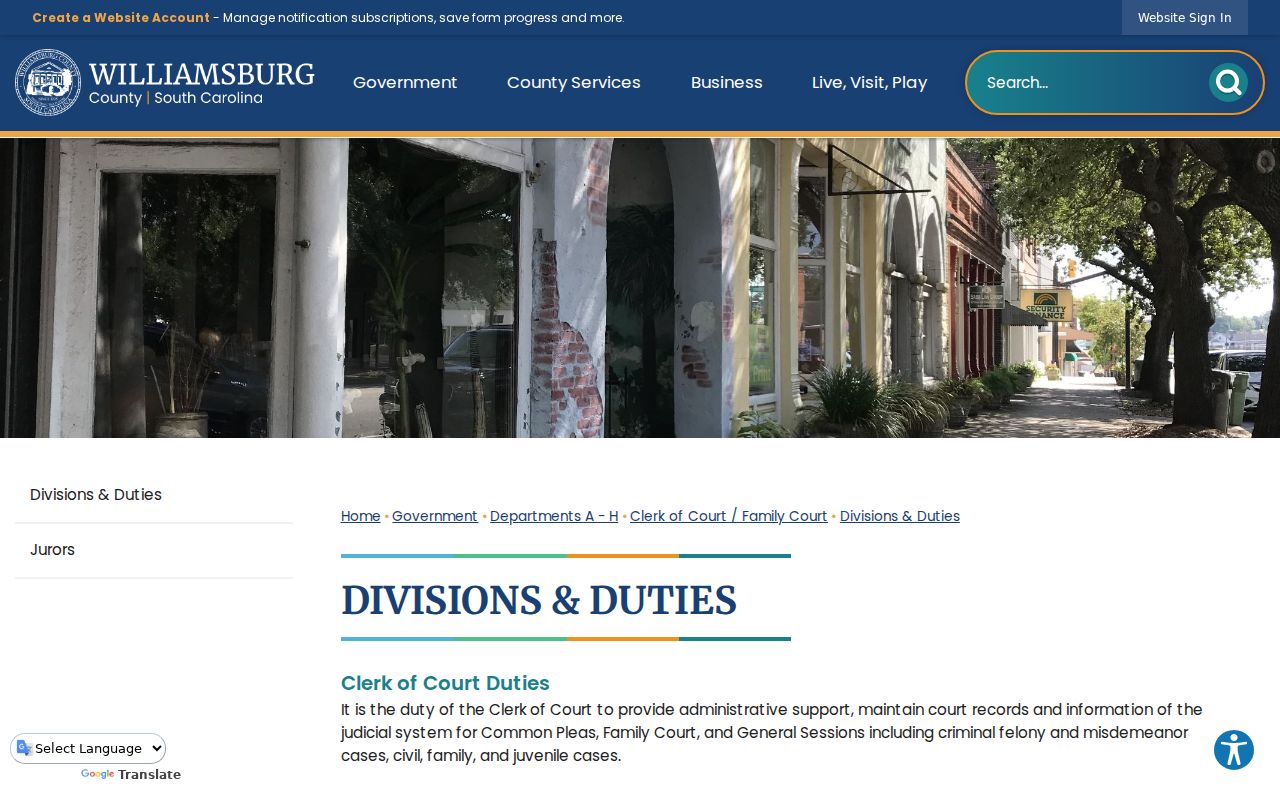
That division of duties connects a docket status to the staff function most likely to hold the filed record.
How to Search Case Records
The free Williamsburg Public Index is the first remote channel for a filed General Sessions case. It is a county-indexed Judicial Branch interface, not one statewide pool. An exact case number is the strongest key. A party-name search can work when the number is unknown, but common names require close review of filing dates, court, charges, and counsel. The screen may list a document without offering its image.
- Open the Williamsburg County Public Index and accept the site notice.
- Use the exact case number when known, or enter the last name and enough first or middle-name detail to narrow the set.
- Review the case header for the court, case type, filing date, and current status before relying on an event row.
- Read docket events in date order, then compare the charge and disposition fields. A scheduled hearing is not proof that it occurred.
- Call the correct Clerk extension for the indictment, filed order, sentencing sheet, or certified copy when the image is absent.
The Public Index fields below help narrow Williamsburg County court results before a clerk copy request.
| Field Label | Type | Required | Notes |
|---|---|---|---|
| County | Selector or context | Yes | Use the Williamsburg public-index instance. |
| Case Number | Text | No | Enter the exact court case number when known. |
| Party Name | Name fields | No | Last or business name starts the search; first and middle names narrow it. |
| Date Range | Date controls | No | Availability can vary by the selected search tab. |
| Search / Clear | Buttons | No | Run the query or reset the criteria where displayed. |
Note: The Public Index can identify a filing, but only the custodian can supply a certified court record.
Williamsburg Criminal Bond Court Timing
A new Williamsburg County arrest may reach Bond Court before the later criminal case appears in the Public Index. Bond Court meets inside the Detention Center at 200 S. Jackson Street at 9 a.m. and 3 p.m. each day, including weekends and holidays. That twice-daily schedule creates an early judicial record about the initial appearance and bond, but it does not replace the later General Sessions docket.
The official Williamsburg Bond Court directory shown below provides the location and schedule.
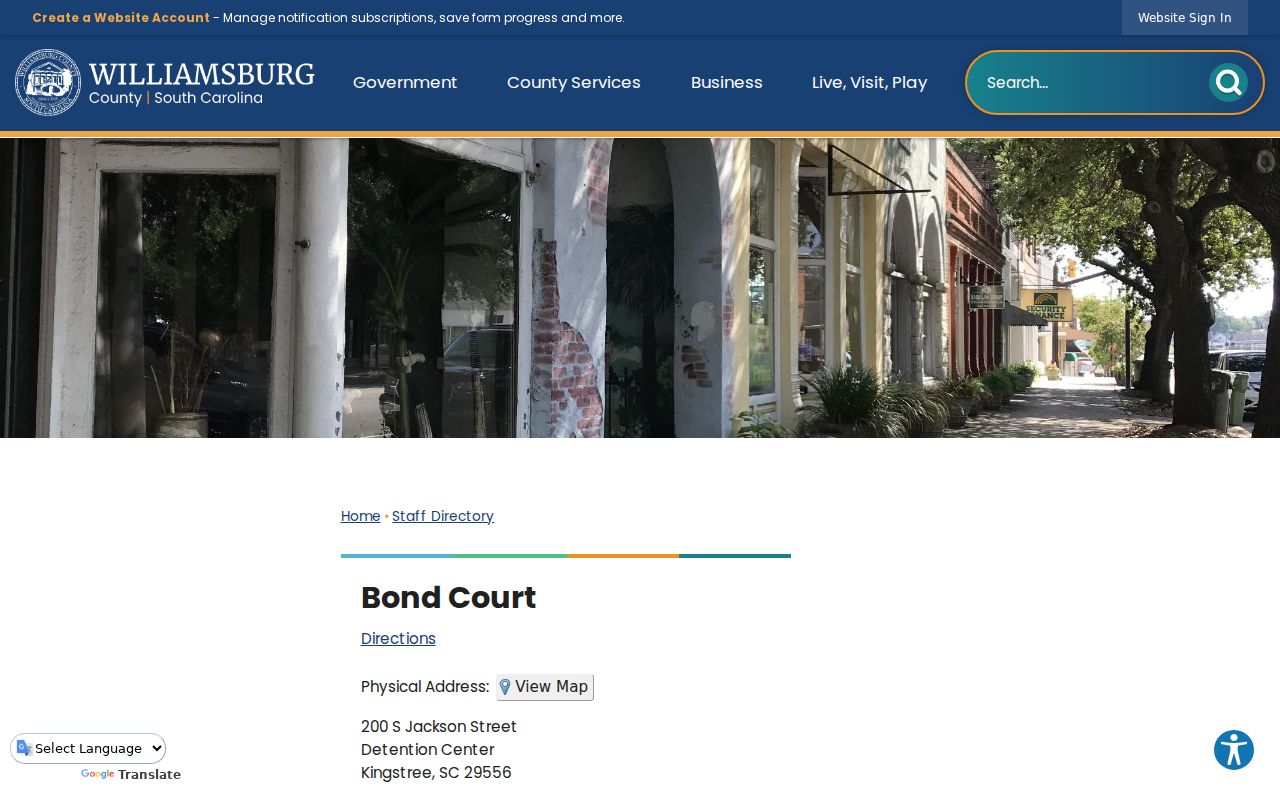
The schedule explains why detention or Bond Court is the sound first call when a same-day name search returns no filed case.
What the Case File Shows
A Williamsburg County court case file follows the prosecution after charges are filed. It can show the State and defendant, lawyers, offense descriptions, filing events, motions, hearings, bond details, disposition, sentence, and financial entries. It is richer than a booking entry because it records what the prosecutor and court did. It is not the same as a SLED CATCH report, which assembles fingerprint-supported South Carolina history across reported cycles.
| Case Number & Court | Identifies the proceeding, its venue, case type, filing date, and status. |
|---|---|
| Charging Document | Shows the filed indictment, information, warrant, or summary charging instrument when public. |
| Docket Entries | Lists filed events such as motions, rosters, pleas, trial activity, and orders. |
| Hearing Dates | Records scheduled proceedings; a listed date alone does not prove the hearing took place. |
| Disposition & Judgment | Reports the court result, including conviction, dismissal, acquittal, or nolle prosequi when entered. |
| Sentence & Conditions | Shows sentence and public custody, supervision, fine, or cost information transmitted into the file. |
Protected identifiers, victim or minor details, juvenile matters, and sealed material can be omitted or redacted. A docket description also does not guarantee a downloadable copy. Request the actual filed item when exact wording matters.
Read Williamsburg Criminal Docket Events
Docket terms mark steps, not always outcomes. An arraignment is the stage at which charges are addressed and a plea may be entered. A remand can move a matter to another court level. A bench warrant is a court command tied to failure to appear or comply. A nolle prosequi means the prosecution has ended that charge without a conviction, though the arrest cycle may remain until any required expungement process is complete.
- Pending
- The case remains open or lacks a final reported disposition.
- Disposition
- The recorded result of a charge or case.
- Nolle prosequi
- The prosecutor ended the charge without a conviction.
- Remanded
- The matter was sent to a different court level or returned for further action.
- Bench warrant
- A judge's order to bring a person before the court for a case-related failure.
The South Carolina Judicial Branch provides the broader structure behind these entries. Its official court site appears below.
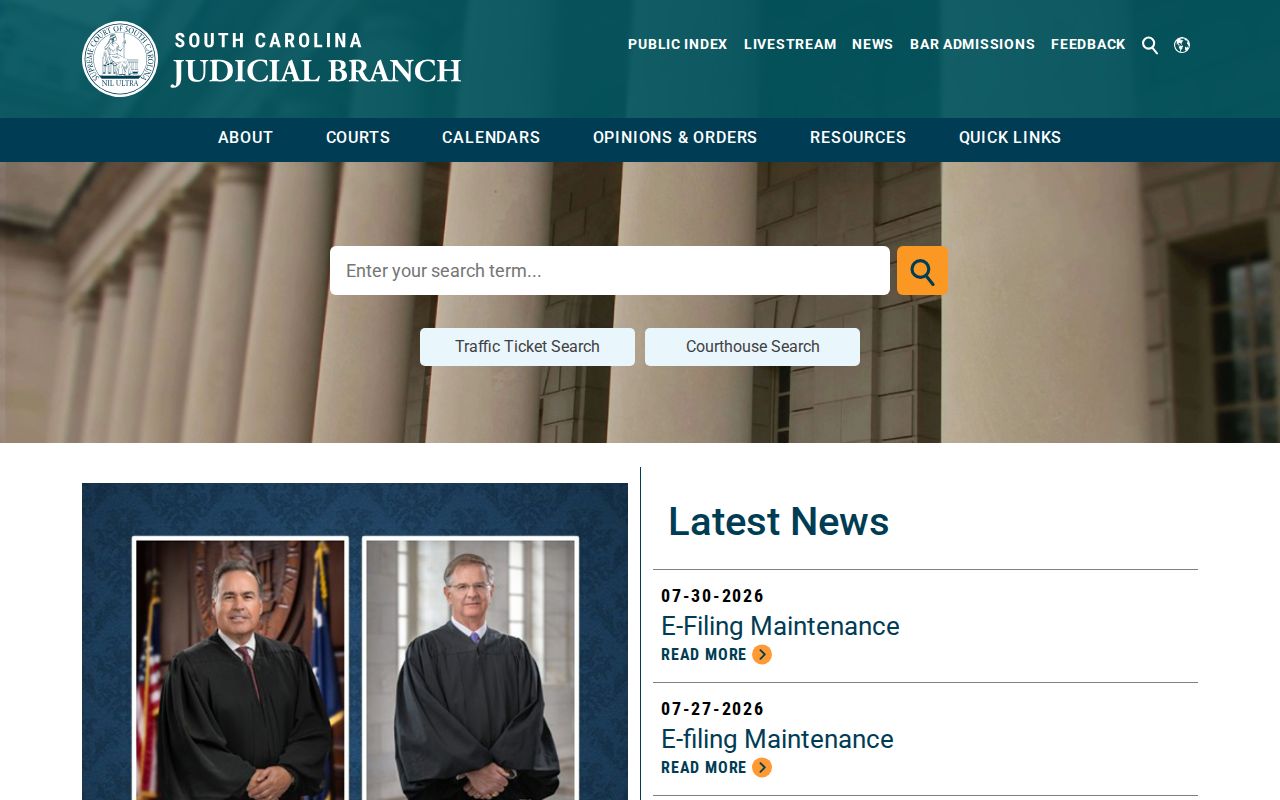
Use the state structure to identify the court, then use the Williamsburg County docket and filed order to confirm the result.
Stages of a Criminal Case
Williamsburg County criminal cases can begin with arrest and booking, followed quickly by a bond appearance. The Solicitor then screens the matter. A felony or higher-level misdemeanor can proceed by warrant and indictment into General Sessions, followed by arraignment, roster settings, motions, plea talks, plea or trial, disposition, and sentencing. Summary charges may stay with a magistrate or municipal court. The route depends on the offense and lawful jurisdiction, not merely which agency made the arrest.
Case flow: Charges Filed › Arraignment › Pretrial › Plea or Trial › Disposition › Sentencing
After a final result, the court reports disposition data to SLED for the repository cycle. That transmission is why a Public Index case and a CATCH report may update at different times. For the earlier arrest and booking trail, the county's Williamsburg County arrest history channels explain which agency owns each source record.
Williamsburg Criminal Courts Compared
General Sessions, Bond Court, magistrate court, and municipal court answer different questions. General Sessions holds the felony prosecution. Bond Court addresses the initial appearance and release terms. Magistrates hear authorized summary matters and perform preliminary functions. Kingstree Municipal Court handles local police charges except those sent to General Sessions. Searching the wrong court can make a real case seem missing.
The official municipal court law is captured below.
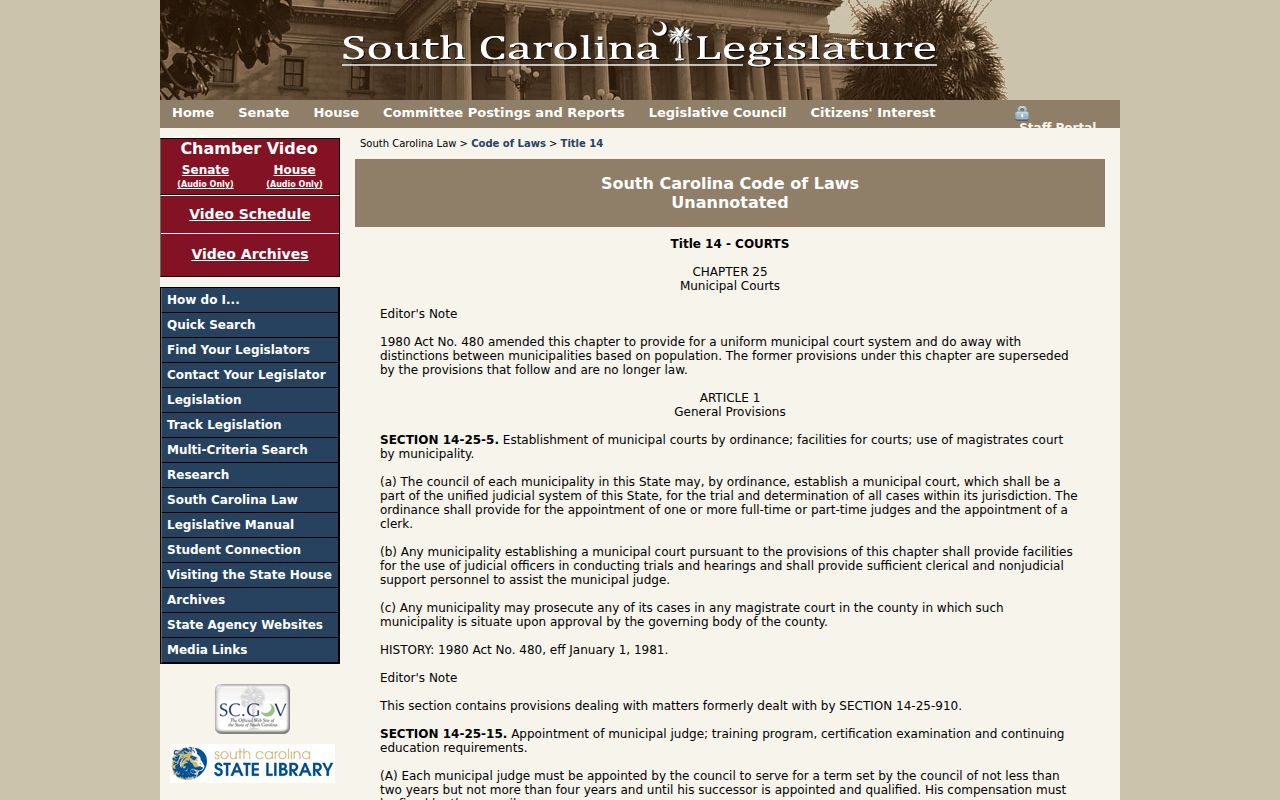
That statute places town proceedings in their own lawful tier rather than in every General Sessions search result.
The corresponding magistrate criminal jurisdiction chapter is also part of the Williamsburg County court split.
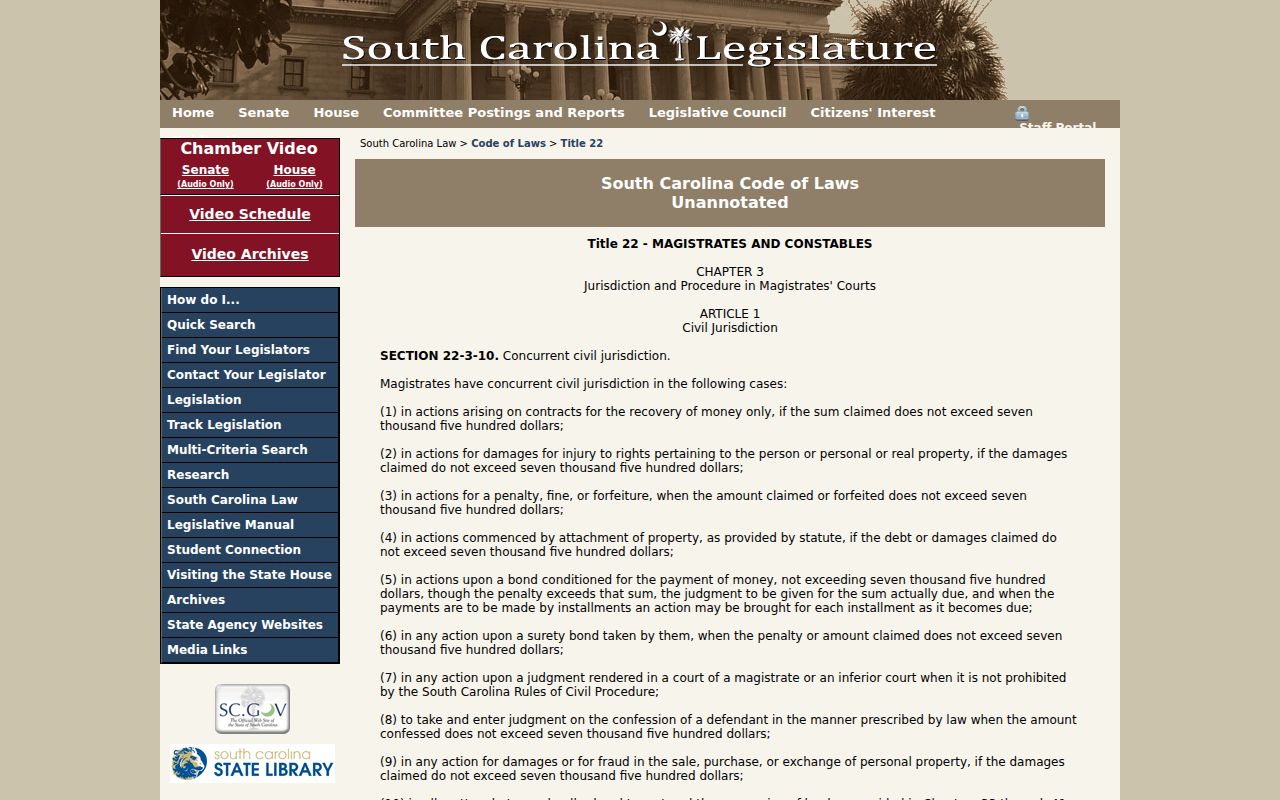
Together, the two laws explain why a complete search may require both a county index query and a direct summary-court contact.
Williamsburg Criminal Case Prosecution
The Third Circuit Solicitor's Williamsburg office prosecutes General Sessions and juvenile cases and administers diversion programs and most expungements. Its local office is at 125 W. Main Street, Kingstree, with weekday hours of 8:30 a.m. to 5 p.m. The number is 843-355-9321 extension 7200. The office lists Pretrial Intervention, Alcohol Education, Traffic Education, Juvenile Arbitration, victim services, and a Drug Court contact.
The official local Solicitor page is reproduced below for source context.
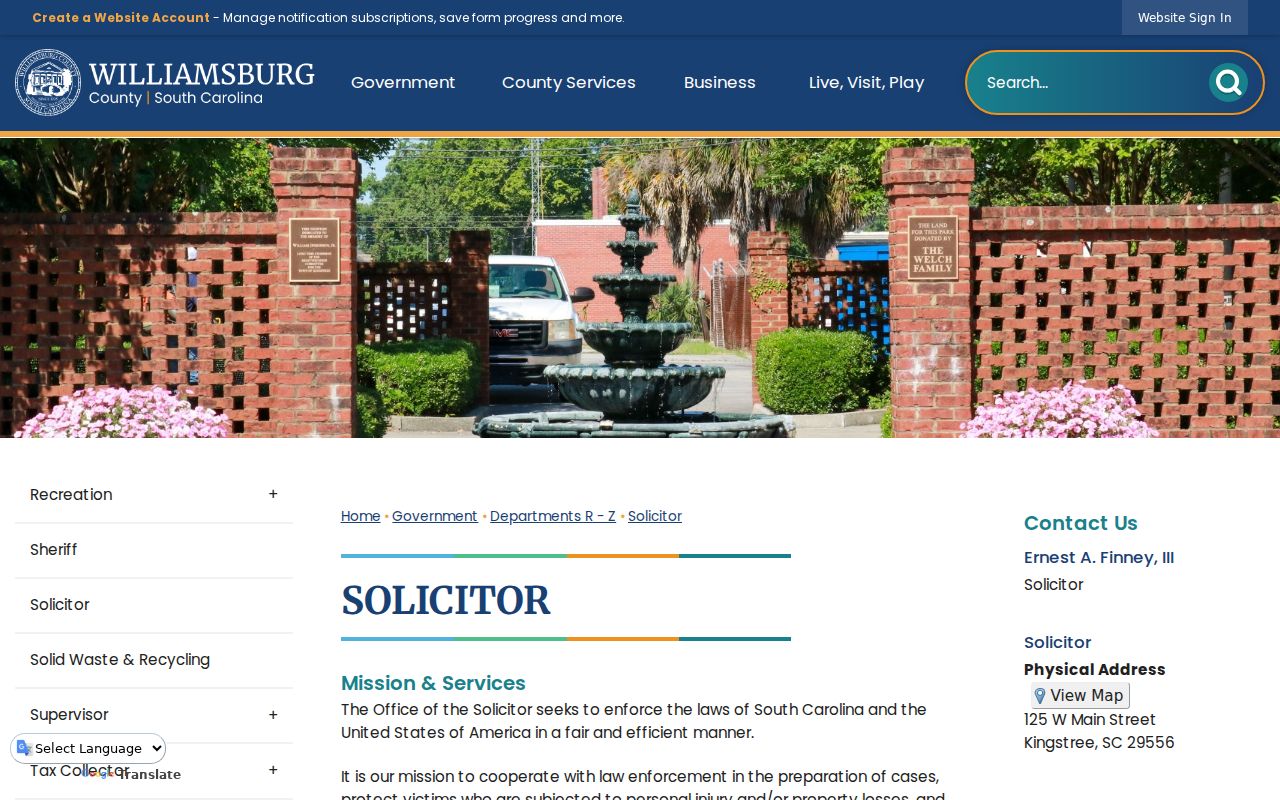
Diversion participation and a later expungement process can affect the public trail, but only the filed disposition and resulting orders establish what happened in the case.
Access & Restrictions
South Carolina law favors access to public records, but court files still contain lawful limits. The South Carolina Freedom of Information Act allows inspection and copying of public records subject to exemptions. It does not override a judicial sealing order. Juvenile files, victim and minor identifiers, Social Security numbers, medical details, protected sources, active investigative techniques, and safety-sensitive facts can be withheld or redacted.
An online omission is not proof that no Williamsburg County criminal case exists. It may reflect filing lag, a summary-court matter, a sealed or juvenile file, a misspelled name, or a document that is indexed but not posted as an image. Ask the named custodian about the precise case number and item. The Clerk handles the court file; the arresting agency handles its incident report; the jail handles booking material; SLED maintains the separate repository history.
Note: A dismissal or acquittal is not a conviction, but public removal may still require the statutory expungement workflow.